Total Pageviews

Saturday, January 15, 2011

Llama Llunch Pack

LLAMA LLUNCH PACK
January 15, 2011

Llamas won't carry people, but they will carry your lunch, or camping equipment, or other items weighing less than 100 pounds. Bahama Llama and Pajama Llama are ShangriLlama's pack llamas, because they are both fully grown adult males with nice, straight backs. Their packs are custom-made just for llamas! The base is fleece, the saddle is a moldable leather, and the left and right packs are nylon. This llama pack would have cost $500.00 new, but Mama Llama bought it at half price from the owner of the llama pack company, who now raises horses. What a lucky find!


Guess what you would discover inside the llama pack below? Lunch for five people! That's right. Bahama Llama is pictured here carrying everyone's lunch on our animal adventure to the park. He also has a half case of water in his pack. Bahama Llama is perfectly content serving as the pack llama, because that's what llamas are primarily used for.  
 
Bahama Llama Carries Lunch for Five People

Do you know why Bahama Llama was chosen as the pack llama? It's because he's...well...pleasantly plump. By carrying the pack, he has to spend a few more calories to get around, and that's good. If a llama gets too chubby, its ankles (pasterns) start to get spongy. After a while, the llama will not walk correctly and then can't walk very far. Wish Bahama Llama luck getting the weight off, because he has a huge appetite, despite many efforts to satisfy him with lower-calorie feed. But he sure is handsome and has the best temperament that Mama Llama has ever encountered. So he really is pleasantly plump.

But Pajama Llama is overweight, too, so he'll be trading off with Bahama Llama to carry the pack on upcoming Llama Walks. Mama Llama thinks she overheard these two chubby llamas talking about joining Jenny Craig as their New Year's resolution. Now that would be an interesting ad campaign!

Happy Trails from Mama Llama!


Llama Cousins

LLAMA COUSINS
JANUARY 15, 2011

These are the llama's four cousins. 
Do you see the resemblance?
Llamas

Guanaco, the llama's wild cousin

Alpacas
Vicuna, the alpaca's wild cousin
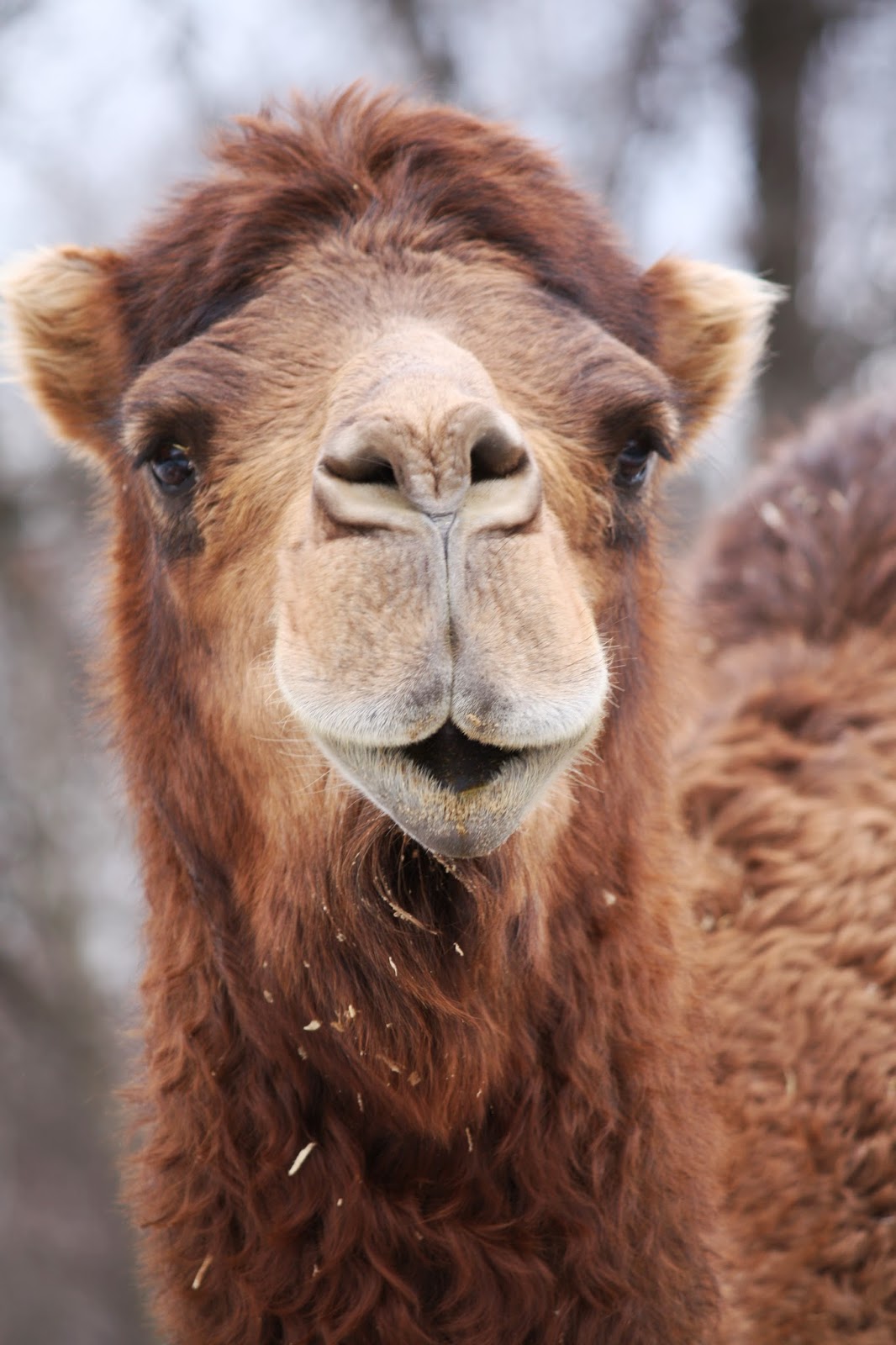
Yup, it's a camel--distant cousin of the llama and alpaca


Why does Mama Llama favor the llama over its camelid cousins? Well, it's pretty obvious when it comes to the camel. Scary! Don't mess with a camel! Then we have the wild cousins--guanaco (gwan'-ah-co) and vicuna (vah-coon'-yah), which, like the domesticated alpaca, are "sheepish," meaning that you can't easily hug or pet them or pal around with them.

But llamas? They're highly social animals. They like to be stroked on their long necks, and they're the only camelids you would enjoy taking a walk with. That's one of the many reasons that we established our private zoo for llamas--so you can spend some time getting to know this very friendly animal. We stock males only, because within the camelid family, male llamas are the friendliness. There's a method to our madness here at ShangriLlama!

And isn't it interesting how many colors the llama comes in? At ShangriLlama, we purposely chose different colors for our pack, among the many options which include black, white, brown, tan and gray in solid, patchwork, and spotted (appaloosa) patterns! The llama's cousins are pretty much just shades of brown--lovely browns--but brown.

It is true that the vicuna, guanaco and alpaca have more luxurious wool than a llama. But what fun is that if you can't easily pet these animals and can't afford to buy its wool at $1,800 to $3,000 per yard?!

The only thing a camel has that might be fun to have on a llama is its hump. People ask Mama Llama ALL THE TIME if they can ride llamas. Nope; no self-respecting llama will let you, because that would hurt their backs! However, lllamas will gladly carry your lunch or your camping equipment in a proper pack on their sides. Walking next to them is plenty fulfilling, just to have the pleasure of the gentle llama's company.

If you've never walked with a pack of llamas, then you're missing out on an unforgettable experience with the most gentle of the four camelid cousins. Do add this to your life's "bucket list!"

Happy Trails from Mama Llama!


Posted by Picasa

Thursday, January 13, 2011

Kushy

KUSHY
January 13, 2011

When a llama wants to take a load off his feet, he kushes.
That simply means he sits down. However, kushing is an unusual position for large animals. But then llamas are unusual critters in many ways , wouldn't you say? Take a peek at Pajama Llama in the kush position:

Pajama Llama spends a "kushy" afternoon in the arena.
Where are his legs?

 Kushing (or cushing or kooshing) is an awkward activity, because the back legs of llamas bend at the hip first and the knees last--after the animal has leaned forward to get a good stretch into those back legs. Sitting is awkward for llamas. First, the llama has to lean its 350-pound, 6-foot-tall body forward, then bend his front legs under, then lean backward to collapse the rest of his body. See how compact a llama becomes when he kushes? 

If a llama kushes near you, then he trusts that you will not harm him. ShangriLlama's pack likes to kush at the park, which is located at the halfway point of our weekend animal adventures called Llama Walks. Adults and children there are amazed to see the otherwise tall llamas just sitting under the trees. If anyone were to dare try to scare the llamas (not with Mama Llama around!), these animals would quickly yet awkwardly rise to their feet. If a llama does not get up, then he's probably not feeling well. What great communication on the llama's part!

So a kushing llama is a happy, relaxed llama. Llamas spend hours kushing in their stables while they chew their cud. Today Pajama Llama kushed in his 150-foot arena, after he enjoyed a sunbath and contemplated which hay he might be served for dinner. I think today's fare is dried Timothy grass. Yum!

Wishing you a kushy day, too!

Happy Trails from Mama Llama!

Llamas Go "Green" After Christmas

LLAMAS GO "GREEN" AFTER CHRISTMAS
January 13, 2011

For the ultimate recycling opportunity, feed your dried-up Douglas Fir Christmas tree to a pack of llamas!
Llamas love to eat pine needles. This makes llamas the ultimate "green" animal, wouldn't you say?

The llamas of ShangriLlama are so lucky that they live on a Christmas tree farm. They rarely pass up the opportunity to take a nibble from a cut-down tree. They mow lawns for free, too, by happily grazing off tall blades of grass, plus weeds and other dried vegetation that are within their limited diet.

Look how well the llamas polished off this Christmas tree... 

... in about 10 minutes!

Llamas Recycled This Christmas Tree!

 You may be wondering how a llama can process the prickly needles of pine trees. Easy! Llamas have one stomach with three compartments, which work over food until it is excreted as virtually odor-free pellets the size of rabbit poo. Honestly! Someday Mama Llama will photograph "llama beans" and tell you all about their value in your rose garden :)

Now Mama Llama can never again look at a "used" Christmas tree without thinking that it could have been a treat for a pack of llamas. Not all trees qualify: they aren't suitable for llamas if they have been sprayed with pesticides, herbicides or frosted white, pink or any other color, either. And only Douglas Fir trees are safe for llamas. The other Christmas tree varieties are on the Bad List of plants never to feed a llama. 

Donate your unadulterated Douglas Fir Christmas tree to a private zoo near you. The llamas will eat every branch and turn the tree into fertilizer. Win-win!

Happy Trails from Mama Llama!

Tuesday, January 11, 2011

Happy Birthday, Bahama Llama!

HAPPY BIRTHDAY, BAHAMA LLAMA!
January 11, 2011

Bahama Llama is 8 years old. This very round number is ideal for this BIG boy!

 Bahama Llama Dresses Up for a Llama Walk

A llama’s birth date is listed on its International Registration Certificate, which contains some interesting facts:

Registered Name:  Bahama Llama’s “real” name is Nitro Glistening, which couldn’t be farther from a good description of this gentle, slow, totally chilled-out llama! Maybe he was a spunky cria (that’s a baby llama).

Bloodline: Bahama Llama’s parents plus four generations of grandparents are named on his certificate. You won’t laugh so hard at ShangriLlama’s names when you read what some of Bahama Llama’s ancestors were called:

Marie Antoinette, Huckleberry Finn, Tia Maria, Titicaca, Errol Flynn, Rib Eye, 
Vichyssoise, Peek a Boo, and Lady Guinevere
Seriously?

Origin: All certified llamas have their blood tested to determine which part of South America their ancestors came from: Argentina, Peru, Bolivia or Chile. Bahama Llama is certified to be Bolivian. Llamas are Bolivia’s national animal!

The one thing that Bahama Llama’s certificate does not contain is his weight, and that’s good, because he’s topping out at 350 pounds! He gets plenty of exercise during his animal adventures to the park on weekends. But he has a BIG appetite! Check out his belly size below:

Bahama Llama Contemplates Going On a Diet

If you’d like to sing “The Llama Song” in honor of Bahama Llama's birthday, here’s a link.
WARNING! This song has a million verses and gets stuck in your head!

https://www.youtube.com/watch?v=KMYN4djSq7o

Happy Trails from Mama Llama!

Monday, January 10, 2011

Eat NO Fruits or Vegetables?

EAT NO FRUITS OR VEGETABLES?
January 10, 2011

Well, the introduction of fruits and vegetables to the llamas failed. They ALL turned up their noses, literally, to the bananas with or without the peel, baby carrots, mini corn cobs, sliced apples, orange chunks and orange rind. What did they get excited over?

Alfalfa.
Como T. Llama enjoys eating alfalfa.

Truly, alfalfa doesn't look tasty, but when five llamas can't stop eating it, then it must taste like candy to them. Alfalfa is high in protein, so it shouldn't be fed regularly or else the llamas will get too fat. Did you know that it is common for American llamas to be overweight? That probably doesn't surprise you.

In case you're wondering what llamas eat and how much, here are the facts:

The average adult 350-pound llama eats approximately five pounds of hay per day. Llamas thrive on a variety of hay, including Bermuda, Orchard and Timothy. Each is low in protein, which is the ideal diet for a llama's sophisticated digestive system (more on this in another blog when Llama Mama gets up the courage to photograph "llama beans.").

So based on today's experiment, llamas don't like fruits and vegetables--or at least the llamas of ShangriLlama don't. But wait! Mama Llama didn't experiment with rose petals. The groomer said llamas like those, too. Skeptical? Me, too. Can't wait to try this out on Valentine's Day!

Until tomorrow...

Happy trails from Mama Llama!

Sunday, January 9, 2011

Llama Alarm Cry!

LLAMA ALARM CRY!
January 9, 2011

Here is the sound of a llama's alarm cry! If you scoured the Internet, you'd be hard-pressed to find this sound! Mama Llama has been patiently (kinda) waiting for more than a year for one of her llamas to emit this cry (while having a video camera available). Finally, it happened today.

You're not going to believe that this sound is coming from a llama--but it is! It's the typical llama alarm cry. Maybe Dalai Llama thought he saw a coyote! That's usually when the alarm cry goes out. The sound is mind-boggling. Do watch this video then return for a few more facts!

Click to hear the Llama Alarm Cry: https://www.youtube.com/watch?v=p_JIUS9PPxw&t=5s
 
  • Did you find that sound eerie? 
  • Did you disbelieve that the white llama was emitting that sound?
  • Do you think it sounds like chickens under water, or a crying baby?
  • Did you notice that the llama never opened his mouth? 
Llamas make a few other noises in addition to the alarm cry. For example, they hum. Some say the hum is equivalent to “Aloha,” in that it has many meanings. For the llama, humming can signify worry, impatience or even reassurance to the other llamas. In Mama Llama’s experience, however, humming means that the llama is annoyed. Pajama Llama will hum if it’s taking too long to get his pack out the gate for their animal adventure to the park. He’ll also hum if his pack is walking too slowly on the trail. Pajama Llama actually hums a lot, but as the pack leader, he’s in charge of keeping the other llamas safe, so dawdling annoys him.

Aside from alarming and humming, llamas also orgle when they’re breeding, they cluck at other males perceived as competitors, and they snort before engaging in a fight. Mama Llama’s favorite sound is the “raspberry.” This occurs whenever llamas from different packs greet each other. Then their bulbous lips vibrate rapidly, and the resulting sound much like a sneeze. A little bit of spit flies as the llamas’ lips flap around, but that’s friendly spit, eagerly shared among llamas.    

With all these sounds—alarming, humming, orgling, clucking, snorting and making “raspberries”—you might think that llamas are noisy animals. But they’re not; they’re mostly completely silent. That makes them wonderfully quiet neighbors, whose infrequent vocalizations are mostly delightful to witness.

Happy Trails from Mama Llama!


Saturday, January 8, 2011

Llama Pedicures

LLAMA PEDICURES
January 8, 2011

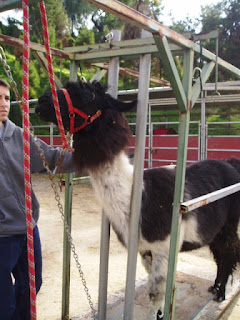
All five llamas received a pedicure this morning. None liked it very much. It's kinda hard to blame them. They had to stand in a portable llama chute to keep them still and safe from being nicked by the trimmers. Llamas fuss when their feet are lifted off the ground, because then they can't run to defend themselves. I commend the groomer for his bravery in holding up the feet of 200- and 300-pound animals while closely trimming their nails. Mama Llama is NOT going to become a llama pedicurist!


How do you know when a llama's nails are trimmed correctly? I'll bet you have always wondered this (not!). I'll tell you anyway. If you hear clicking on the pavement when a llama walks by, then his nails are too long. Llamas should walk silently. In fact, it is said that a correctly pedicured llama should be able to carry a full glass of wine on his back without spilling a drop. That's not one experiment we're going to attempt at ShangriLlama, especially with Dalai, the white llama, or Como, the one who likes to run sideways, but you get the idea. Llamas walk smoothly and gracefully when properly pedicured. They're a sight to behold when they gracefully walk our city's trails on their weekend animal adventures to the park.


Here are the bottoms of a llama's feet. Pretty, cool, huh! See the black pads? They're leathery and kinda squishy. The llama's toe nail surrounds the pad, like a frame. The nail is very black and should not extend much beyond the tip of the pad. The extra can be cut off with what look like sharp garden shears, and it comes off easily--if you know what you're doing.

During the pedicure, the groomer was chatting about his 22 llamas and what they like to snack on. He said they love bananas with and without their peel, plus rose petals, mini corn cobs, apple slices, salad (without dressing), and sliced, unpeeled oranges. Really? We're going to offer some of these treats to the llamas tomorrow!

Happy Trails from Mama Llama!

50 Pictures for One Pose

50 PICTURES FOR ONE POSE
January 8, 2011

How many photos should a person have to take
to capture five llamas in a single frame?

The llamas of ShangriLlama

The answer is...50! Or at least that's how many photos we took today,
and even then, one llama didn't quite cooperate. 

Still, we're pleased to show you the entire pack's photo:

Barack O'Llama is the little brownish-black one in the front left. He's a one-year-old spitfire.

Dalai Llama is the bright white one. He's also one year old and gorgeous.

Como T. Llama, a very large yearling, is behind Barack. Como moved just when the camera clicked, but then Como is always moving around--mostly sideways. He's too big for his body, and we think he's got ADHD.

Bahama Llama is behind Como. He's seven years old and quite plump but a sweetheart.

And the leader of the pack, 10-year-old Pajama Llama (alias P.J.), is pictured in the background. He was in the foreground when we set up this shot, which gives you some idea how difficult it is to capture an entire llama pack in one frame. 

We took this photo while on our weekday animal adventure through the Christmas tree farm where the llamas of ShangriLlama live. Llama Boy--who started ShangriLlama when he was 12--walked Barack, Dalai and Como using the three-llama lead. Llama Boy didn't care much for this newfangled device, because Como insisted on walking sideways into the other two llamas. That's when spit happened! Mama Llama thought that was funny, mostly because she was walking Bahama and Pajama, who were well behaved today. So from Mama Llama's perspective, it was a good walk.

It's not so easy to walk
three llamas on one lead!


Tomorrow Pajama Llama and Bahama Llama will receive their pedicures. We have to use a chute to keep them still. Photos, and hopefully video, should be interesting!

Happy Trails from Mama Llama!

Friday, January 7, 2011

The Three-Llama Lead Experiment

It’s kinda difficult for one person to walk three young llamas. Each one likes to move in a different direction toward whichever leaf or blade of grass interests him most. So to avoid tangling the llamas’ lead lines, the handler has to constantly flip the ropes about. Mama Llama was about to try out for a part-time job as a rodeo roper (not really) when she saw a three-llama lead in a llama magazine. (Yes, there really are llama magazines!)

The three-lama lead arrived today. This nifty device has three hooks—one to connect each llama to the single lead. This will be a great item--once the three yearlings learn to cooperate with each other.

You see, llamas are forever re-establishing their pecking order. Who goes first, second and third out of the stall and into the arena? This order changes according to rules that behaviorists haven’t quite figured out.

So today, when Mama Llama attached the three-llama lead, the bewildered yearlings walked simultaneously out of their stall then stopped abruptly as they determined who would lead and follow. To establish his superiority, Barack O’Llama (affectionately called Barry), spit at Como T. Llama, who moved sideways into Dalai Llama, who stopped cold. So Barry led, followed by Como, with his mouth hanging open from yucky spit, followed by Dalai.

Once they arrived at the arena, (only about 150 feet from their stalls), “the boys” were so annoyed with one another that they skipped playtime (wrestling matches) and instead stole pine needles off the Christmas trees that hang within reach. (BTW, the llamas live on a Christmas tree farm.) 

Mama Llama then went back to get Pajama Llama and Bahama Llama, with their leads tied in the middle. You see, Pajama likes to walk really fast, and because Bahama's overweight (read: FAT!), he serves as a weight to slow Pajama down so Mama Llama can keep up.
Anyway, Mama Llama was thinking that the three-llama lead experiment wasn't going to work out. But on the way back to the stalls, Mama Llama was EASILY able to guide Pajama and Bahama in one hand and the three yearlings in the other. Encouraging!
Tomorrow, all the boys and I will go on a walk around the 7-acre Christmas tree farm. That should be fun?!

Wednesday, January 5, 2011

Llama Llove

LLAMA LLOVE
January 5, 2011


Happy New Year from Mama Llama!

This new blog is for llama llovers. 

Question: 

How do you know if you're a genuine llama llover?  

Answer: 

1. You can't get these woolly, funny, humpless camels off your mind!

2.  Hands down, llamas are your favorite animal.

3.  You own lots of llama-related items (tee shirts, stuffed animals, jewelry).

Are you a llama llover? 

If so, you will enjoy following this blog to learn about 
the adventures of a pack of llamas  
which are collectively called...

...ShangriLlama!

Happy Trails from Mama Llama!