Total Pageviews

Friday, May 6, 2011

What's A Llama Good For?

WHAT'S A LLAMA GOOD FOR?
May 6, 2011


WHY DO PEOPLE ENJOY THE COMPANY OF LLAMAS? After all, they look a bit intimidating with their bulbous eyes, banana-shaped ears and giraffe-like necks.

The Dalai Llama & Barack O'Llama from ShangriLlama

Most likely, it is because llamas are naturally gentle and compliant. That’s also why they’re among the world’s oldest domesticated animals, which is a very small group of critters that have a friendly disposition, will procreate in captivity and don’t mind being fenced in.

Here’s the entire list of domesticated animals, in the order they were domesticated:

Dog, sheep, pig, goat, cow, cat, chicken, guinea pig, donkey,
domesticated duck, water buffalo, horse, dromedary camel, llama,
silkworm, reindeer, rock pigeon, goose, Bactrian camel, yak,
banteng (cow), gayal (cattle), alpaca, ferret, Muscovy duck,
guinea fowl, common carp, domesticated turkey,
goldfish, and European rabbit 

Are you wondering why the panda, lion and zebra aren’t on this list? These animals and others like them can be tamed, but they are certainly not naturally friendly or compliant, which means they probably never will be domesticated are are best encountered in a wild animal zoo.

Domestication has proven to be a very good thing for llamas—and for us. Because of the scarcity of food in the harsh wilds of South America, llamas would have become extinct if not for the people of Peru in about 3,500 B.C., who chose llamas to serve as beasts of burden. Now all over South America, llamas are used to carry up to 1/3 of their weight in cargo as far as 15 miles a day.

Since the 1970s, llamas have been at work in the U.S.A. in a variety of capacities, including:


Hiking

Take a pack of llamas on a hike through the woods or along a mountainous area. They can carry your camping equipment, and because llamas are so agile, they can quickly maneuver out of the way of oncoming horses and other hikers.


Carting
 Llamas can pull one or two people in a specially designed cart. Such llamas must be at least four years old (fully grown) and trained for the task, but llamas learn quickly.


Walking
If you’d like to spend some time getting to know the nature of llamas, take a pack of llamas for a walk! Llama Walks enable you to learn about these incredibly interesting creatures by observing them up close.

Educational Sessions
If you'd like to watch llamas interact with one another, sign up for Llama Llessons to learn about these fascinating animals from head to toe. You'll be surprised just how different llamas are as compared to other barnyard animals.


Golfing
If you can find a golf course that will allow you to use a llama for a caddy, then you will surely distract and impress your opponents--and everyone else within view. Don't forget a small rake and shovel to pick up the llama beans. Offer them to the groundskeeper for use as fertilizer.


Showing
 Many llama owners participate in llama shows, which are similar to dog shows and horse shows. Llama owners are awarded ribbons and sometimes prize money for having the llama with the best wool, disposition, cart driving, obstacle driving, haltering or performance. There are special youth awards, too. The offspring of award-winning llamas are considered more valuable when sold, which brings us to our next subject...


 Breeding
This activity requires a breeder's license, a horse-zoned property, proper acreage--and lots of time. But baby llamas, called crias, sure are cute! 


Spinning 
A month before the summer season, llamas are shorn for the wool that they grow. This luxurious, highly valuable wool can be cleaned, spun, dyed and knit into clothing, rugs and accessories.


Loving
 It’s easy to fall in love with llamas, because they are so beautiful, gentle, intelligent and quirky. No wonder they were domesticated long ago.


Here’s hoping you get to spend some time with a llama soon, whether it is for exercise or for the pure pleasure of being with them.

Happy Trails from Mama Llama!

Thursday, March 24, 2011

Bahama Llama Walks For Children With Cystic Fibrosis

BAHAMA LLAMA WALKS FOR 
CHILDREN WITH CYSTIC FIBROSIS

March 24, 2011

Bahama Llama from ShangriLlama
Will Join a Walk for Children with Cystic Fibrosis


In Mama Llama's neighborhood, three children in the same family have been afflicted with cystic fibrosis. Their parents have invited Bahama Llama to participate in the most heartwarming animal adventure of his life, and that is to help raise money toward funding research on this cruel disease. Of course, Bahama Llama is honored to help!

So on Saturday, April 30, 2011, Bahama Llama will participate in the GREAT STRIDES fundraiser. He will walk up to three laps around the beautiful man-made lake at East Lake Village in Yorba Linda, CA., and he is looking for volunteers to help sponsor him.

As you know, Bahama Llama is a little overweight. Okay, a lot overweight. He weights 350 pounds! His Peruvian llama cousins weigh about 30 pounds less. Oh my! So this walk will be good for Bahama Llama. It will also be good for the three Montelone children and others with life-threatening lung and digestive orders caused by cystic fibrosis.

If you would like to sponsor Bahama Llama in the GREAT STRIDES event, please click this link to make a donation in any amount.

http://www.cff.org/Great_Strides/BahamaLlama

Bahama Llama thanks you for encouraging him to take as many steps as he can to help the three children. Their parents thank you for caring about their kids. And the CF Foundation thanks you, too, for helping to fund research to cure cystic fibrosis.

And if you’ve never seen a llama, then you might enjoy coming to the GREAT STRIDES event on Saturday, April 30, 2011, to meet Bahama Llama, to feed him his favorite snack, or to take a picture with him. And don’t worry; he doesn’t spit! He's a former show llama, so he's fluffy, gentle, friendly and very well-mannered.

Happy Trails!
 
To learn more about CF and the CF Foundation, visit www.cff.org.

Sunday, March 20, 2011

Llama Lips

LLAMA LIPS
March 20, 2011


WHEN A LLAMA EATS, 
IT LOOKS LIKE IT’S PLAYING THE PIANO!

Click just once on the video below
to watch as Dalai Llama and Barack O’Llama
pretend to run their fingers up and down a keyboard
while they enjoy some teeny-tiny snacks:


Did you notice that their split upper lips move independently?

Take a look at these lovely llama lips:

Barack O'Llama Shows Off His
Gorgeous Lips

 Guess what lies beneath the upper lips? 
Nothing! 
Llamas have NO upper front incisors!

Here’s a partial view of Dalai Llama's palate. 
Can you tell that he wasn’t fully cooperating for this photo?

Dalai Llama Reveals That
Llamas Don't Have Upper Front Teeth

Instead of upper front teeth, llamas have hardened gums.
These gums serve as a firm cutting board
for the llama’s lower front teeth
to chop up hay or grass or pellets.

So…do llamas bite you when taking food from your hand? 
No! 
Llamas don’t have upper front teeth!!! 
 They merely tickle your cupped hand. 

It’s fun to feed llamas, 
so the next time you're at a private zoo that houses a pack of llamas, 
be sure to watch the llamas' lips grasp, flap, quiver 
and pretend to play the piano 
as these hilarious animals enjoy 
grass, hay or treats provided to you only by the zookeeper.
(Llamas have a delicate diet, so please don't bring the llamas your own treats.)

Here’s a video of Dalai Llama devouring one of his favorite treats--
a very large bundle of fresh grass.
Yummy! Click once for a laugh!

 
Happy Trails from Mama Llama!

Saturday, March 5, 2011

Llama Show Dropouts

LLAMA SHOW DROPOUTS
March 5, 2011

Everyone knows that there are dog shows, cat shows and horse shows. BUT DID YOU KNOW THAT THERE ARE LLAMA SHOWS? Just imagine 100 llamas getting together to determine which one has the best wool, the best body (conformation), or is the highest jumper or the best all around. Strange but true!

If you want to do something really different, why not attend a llama show? These animal adventures take place in various parts of the country, and the schedule is published at: https://secure.lamaregistry.com/news/calendar-of-events.php

The llamas of ShangriLlama all come from parents that have won Grand Champion, Reserve Champion or blue-ribbon prizes. And all the llamas here have won prizes themselves at llama shows. But once a llama decides he doesn't want to compete anymore, not much can be done except let the animal become a llama show dropout. So instead of training to pose, walking through obstacle courses, jumping high or pulling a cart, these llamas spend their days wrestling with each other, lying in the sun or cooling in their air-conditioned barn, or socializing with visitors, and they especially like to eat, eat and eat! Sounds like a fun schedule to me! If there were a competition for gorgeous, pampered, friendly, overfed former show llamas, then Mama Llama’s entire pack would win.

Just how playful are the ShangriLlama llamas? Here’s a video clip of  Dalai Llama taking a piggyback ride then cheating at wrestling with Barack O'Llama. Click just once to enjoy!


Happy Trails from Mama Llama!

Thursday, February 17, 2011

Of Mice and Popcorn?

OF MICE AND POPCORN?
February 17, 2011

Guess what it smells like when llamas release a hormone to warn the rest of their pack that danger is lurking? Some say it smells like the odor of mice (yuck!), while others liken it to burned, buttered or caramel popcorn. It depends on the llama whether the scent is mousy or reminiscent of a variety of Orville Redenbacher’s popcorn line. In the same way, when humans feel threatened, we release a scent from a gland under our arms. Some of us don't smell too awful, while others definitely do! So it depends on the llama's own level of hormones whether you'll be treated to the aroma of popcorn or the wonky smell of mice.

 Mama Llama smelled the llama hormone a couple years ago during a Llama Walk, when the pack was passing through the middle of a large, grassy field. Out of nowhere, the scent of popcorn filled the air! Of course there was no popcorn stand in the field, so how was this possible? Then Mama Llama remembered about llamas releasing a scent when these animals experience fear. The scented llamas were yearlings, and yearlings are prone to overreacting. Maybe a dog that looked like a coyote came into view? If so, it was long gone, but the popcorn scent lingered. It was as strong as the scent of popcorn sold in carts at Disneyland, where blowers send the enticing aroma at the crowd. There was no need for anyone to dip their head to take in the smell. And that would be a bad idea, anyway, because llamas have powerful legs used to accelerate quickly and to kick predators. They don't kick people without provocation, but they do have a reflexive response to kick out if you grab their legs. Good to know!

That day in the field, it was Bahama Llama sending a buttered popcorn scent our way. Dalai Llama, however, let out a burned popcorn smell. That was unpleasant, but at least it didn't smell like mice!

Llamas release their scent from oval-shaped, leathery glands located on their lower back legs (metatarsals). Here’s what that patch looks like, courtesy of the very handsome Dalai Llama:


Dalai Llama's Metatarsal Scent Glands
 

On numerous Llama Walks, people have noticed Dalai Llama's lovely scent glands and have asked if he had a boo-boo. Nope! Scent glands are just highly visible on light-colored llamas. Every llama has scent glands, but most of these narrow patches are covered by wool. Dalai Llama is a Peruvian llama, which are known to have relatively little wool below the knees.

 If a llama continues to be concerned about a perceived threat, he escalates from emitting a scent through his metatarsals to screaming at the predator. Learn more about that in the story called "Llama Alarm Cry" found in this blog's index.

 Happy Trails from Mama Llama!

Friday, February 11, 2011

Llama Cookies

LLAMA COOKIES
February 11, 2011

During this Girl Scout Cookie Season, 
the ShangriLlama llamas are ruminating about a new flavor they’d like to propose, because it is…

…as enticing as Thin Mints™,
…as delicious as Tagalongs™,
…as exotic as Samoas™,
…as flavorful as Lemon Chalet Cremes™,
…as playful as Do-Si-Dos™,
…and as shapely as Trefoils™!

Introducing Llama Cookies!

Enough Llama Cookies for a Pack!

These seemingly magical cookies disappear in the blink of an eye when presented to almost any llama. They’re irresistible! The “boys” think that people will like these cookies, too! Watch the way the pack surrounds Llama Boy, hoping for a llama cookie morsel: 


Surely, a cookie flavor that nearly causes a stampede should be considered for addition to the Girl Scout Cookie catalog! But until these cookies are widely available by Girl Scouts, the llamas invite you to make your own at home. Here’s the secret recipe:
Llama Cookie Recipe
1 cup uncooked oatmeal
1 cup flour
1 cup shredded carrots
1 tsp. salt
1 tbsp. sugar
2 tbsp. vegetable oil
1/4 cup water
1/4 cup molasses
Set your oven to 350 degrees. Mix the above ingredients together. Form tablespoon-sized balls of dough. Place the raw dough on a cookie sheet. Bake the cookies for 15 minutes. Wait 10 minutes for the cookies to harden. Then, enjoy a cookie yourself—as long as you give one to a llama, too!

And don’t forget to support your local Girl Scout troop by purchasing at least one box of cookies this season. Top flavors are listed in the first paragraph. 

The above trademarks are owned by the Girl Scouts of America, which does not endorse Llama Cookies. Maybe someday?

Happy Trails from Mama Llama!

Saturday, February 5, 2011

Should You Own a Llama?

If you have been smitten by a llama, you may be fantasizing about owning one. In fact every single week, Mama Llama encounters someone that desires to own a llama. Those woolly, friendly, funny llamas are irresistible. But should you own one?

Best Friends: The Dalai Llama & Barack O'Llama

Well, you can't just own ONE. Llamas live in social groupings called packs. A llama all by himself would pine away and die! So you would have to buy...not one more llama but TWO MORE! A pack of three is the minimum number for the animals to feel safe. That's a small pack. A medium pack totals five llamas, and a large pack has six llamas. After that, you've got multiple packs, which equals a herd, and they usually have separately fenced living quarters according to their age and temperament. Additionally, males do not live in the same enclosure with females after they are weaned.   

Four of the llamas in ShangriLlama's medium pack.


Within a pack, one llama is the leader, and the rest jockey for their position based on winning or losing wrestling matches and other llama activities. When danger lurks, llamas in a pack rush together and stand strong against a predator. A pack is a family unit, and llamas do well in groups of three to six.  

It is true that a single llama or two females that possess a guardian's temperament can be used to protect small livestock, specifically alpacas, goats and sheep. Llamas will defend these critters with their lives. But llamas thrive within their own species. And there are other animals well-suited as guardians of small livestock, especially Anatolian Shepherds, Great Pyrenees and donkeys.

Llamas must exercise daily and they need room to run. About an acre is a good starting size for a small or medium pack. But first check with your city hall for zoning laws relating to "head per acre." In some cities, four llamas can live on a single acre, while in other cities, four llamas must be allotted four acres! 

ShangriLlama's Playpen
 
Llamas must live on land that is zoned for horses or livestock, even if the land is big enough for a small or large pack of llamas.

Very few veterinarians are trained to come to the aid of a sick llama. Llamas are remarkably hardy animals, but you may be hard-pressed to find qualified emergency medical care. Why? Llamas have not been studied long in the U.S., and most veterinary schools don't teach about them.

There are more than 125 common plants that are poisonous to llamas. Clear identification and cross referencing of every single plant and weed must be made before bringing llamas onto your property. That's why llamas live on dirt-lot properties or within fenced grassy fields, usually far enough away from neighbors that leaves don't blow into the llamas' field. In the spring, diligence is required to remove plants that grow seemingly overnight after birds, rabbits, squirrels and other critters move from yard to yard.

Llamas can easily pick up the parasites of other barnyard zoo animals.  At most farms, critters share land, and there's little harm if one species eats the food of another species. Not so with llamas housed with chickens, goats and sheep, which eat feed and supplements that are not good for llamas. Parasites are also a problem for llamas that can easily pick them up from other farm animals. Whitetail deer, especially, must not pass through the llamas' enclosure. Instead of living with other species, it's best that llamas live next to the rest of the barnyard animals on the other side of a fence. 

Llamas are sensitive to heat and humidity. They grow wool--about six pounds each--which must be removed just before summer and again mid-summer in southern states. Even without their coats on, they need fans pointed low at their digestive system, where they get the hottest. Shelter is necessary year-round to protect these animals from the overhead sun and rain, and to keep their feet and bellies warm and dry in the winter. 

So, should you own llamas? Yes, they will enhance your life and be on track to live long, healthy lives themselves if...you have properly zoned, cleared and fenced land plus a great veterinarian with experience caring for this relatively unusual pet, and a temperature-controlled shelter. Whew! 

But if that's not your situation, you can still visit llamas at local zoos, animal adventure parks, wildlife attractions, plus some private zoos like ShangriLlama! And if you'd like to learn about llamas, do come for a Llama Llesson during the summer in the llamas' air-conditioned barn.

Happy trails from the llama-smitten Mama Llama!

Friday, January 28, 2011

Llama-tude

LLAMA-TUDE
January 28, 2011

Five llamas are as different as any five people. And it turns out that the five llamas at ShangriLlama's private zoo near Dallas are so different from one another that they represent all of the eight basic personality types identified in the world’s most famous personality test--the Myers-Briggs Type Indicator.

The basic personality types are:

ExtroversionIntroversion
SensingIntuition
ThinkingFeeling
JudgmentPerception

Let’s take a look at the pack's personality test results. Which llama do you think and act like? That's your llama-tude!


Pajama Llama is the
most serious in the pack.
Pajama Llama
Pajama Llama is an ISTJ. This means that he thinks before he acts, he relies on his five senses to evaluate a situation, he makes decisions in a detached, unemotional way, and he likes to have matters settled quickly. That’s why he’s such a great leader and is acknowledged as the head of the pack! He’s a no-nonsense guy that’s intent on getting the job done right, quickly, and without concern for others’ feelings. Are you a Pajama Llama?


Como T. Llama

Como T. Llama is the
most playful pack member.
Como T. Llama couldn’t be more different than Pajama Llama; in fact, his temperament is the exact opposite! This could explain why the two never hang out. Como is a totally action-oriented extrovert. He wants to play, play and play! But he can’t help it; he’s an ENFP. He acts first and thinks later—or not until Pajama Llama sets him straight with ears back and a stern look. And while Pajama Llama will carefully evaluate a situation, Como relies on his feelings and simply blurts out an alarm call when there really isn't any need to round up the other boys. He's a spontaneous llama who just wants to have fun. Are you a Como T. Llama? 


Bahama Llama is
everyone's favorite llama.

Bahama Llama
Bahama Llama is more like Pajama Llama, in that they are both introverted, they rely on their senses to evaluate a situation, and they like to have matters settled quickly. But Bahama is an ISFJ, and that F is the reason he’s not the leader of the pack. Bahama values fitting in with the other llamas and having harmonious relationships with them. Yet Pajama Llama prefers to be more detached and logical. As a gentle, loving llama, Bahama will always be #2. If you’re a Bahama Llama, maybe you’re just too nice! Are you a Bahama Llama?


The gentle Dalai Llama

    Dalai Llama 

Dalai Llama is an ISFP, meaning that he is Introverted, Sensing, Feeling and Perceiving. His introversion dominates his personality. It makes him gentle, sensitive, patient and tolerant. That’s why he prefers to linger at the back of the pack instead of asserting himself. However, because of his beautiful, mystical blue eyes and silky white coat, he appears to be cool and aloof. But he’s really not; he’s quite friendly! In fact, the other llamas invite him to wrestle in almost every match in the arena. Dalai is good at wrestling the other young llamas to the ground, yet he doesn't desire to move up in his pack ranking. He is just happy to be invited to play. Are you a Dalai Llama?


The opinionated
Barack O'Llama
Barack O’Llama is affectionately called “Barry.” He’s an ESFJ, which makes him the perfect companion for Dalai Llama. And the two really are best buddies! Barry’s extroversion balances Dalai’s introversion, while their common sensing ability makes them both evaluate situations similarly. But Barry is still quite different from Dalai. He often overreacts when his feelings are hurt by another llama encroaching on his personal space. That’s when spit happens, and Barry is the spittiest of the ShangriLlama llamas. But don’t worry; none of them spit at people. Heaven forbid! Only abused or poorly trained llamas do that, and ShangriLlama’s llamas are well trained and quite pampered. Mama Llama thinks that Barry’s spitting may be his way of sharing his opinion about—everything—which is a typical characteristic of an ESFJ, along with talking a lot. Barry, of course, hums rather than talks. Do you happen to be a Barack O’Llama?

 
Mama Llama hopes that you are amused to learn your Llama-tude. And you can learn more about the Meyers-Briggs Type Indicator (MBTI) through a Google search. There’s a wealth of data out there for free and it's a lot of fun!

Happy Trails from Mama Llama, an INFJ.

Wednesday, January 19, 2011

Llama Beans & Tea


LLAMA BEANS & TEA
January 19, 2011

Everyday, llamas around the world produce time-release fertilizer capsules for your garden. These capsules are fondly called llama beans and less fondly called manure. Okay, some call it llama poop. Regardless, you can grow beautiful fruits & vegetables with a little help from a llama’s back end.

You see, llama beans serve as a nearly perfect fertilizer. These beans won’t burn plants the way that synthetic fertilizers can. So you can place time-release llama beans around your plants just as soon as they plop out of any llama. Or you can concoct llama tea by placing a cup of llama beans in a tall spray bottle and filling that bottle with plain ol' water. In a couple of days, the water will turn brown, and you can spray the roots of plants, spray aphids off your roses, and then fill that spray bottle with water 9 more times, until the water no longer turns brown. Then go get some more llama beans; there's never a shortage at a llama ranch!

Llama beans and llama tea are much better fertilizers for your garden than synthetic chemicals, which have too much nitrogen for plants, deplete the soil of micro-nutrients, and leech into drinking water. Yuck! And unless you enjoy the smell of cow, chicken or other barnyard animals’ manure, you just might want to consider switching to nearly odorless llama beans!

Let’s take a look at how llama beans are made. Here’s Pajama Llama preparing a fresh batch:

Pajama Llama cooks up some llama beans.

That was easy! Now let’s see what he made:

Genuine Llama Beans for your garden

Surprised? Yes, llama beans are small, aren't they? It's hard to imagine that they come from 350-pound, six-foot-tall animals. But llamas have a highly sophisticated digestive system consisting of one stomach with three compartments that soak the hay to soften it, then ferment the hay, and finally break the hay down with digestive enzymes. What's left? Coffee-bean-sized pellets, which the llamas deposit in dung heaps, rather than all over the yard. How considerate!

It takes five days for food to pass from the llama's mouth to its other end, but llamas eat 16 hours a day. So they are always spilling the beans.  ShangriLlama uses its llama beans to fertilize trees in the llamas' meadow. But your local petting zoo or a small zoo near you may be happy to give you their llama beans. You may be doing them a favor! Offer to bring a sturdy, taped box, disposable gloves and a hand shovel to collect the beans yourself. 


Happy Trails from Mama Llama!

Dirty Llama

DIRTY LLAMA
January 19, 2011

Barack O'Llama loves to be dirty, which is unusual for a llama! He'll walk through muddy puddles, while his stable mates will jump over or go around them. And "Barry" will roll in hay, which sticks to his coat. He's not bothered a bit by looking messy. Como T. Llama and Bahama Llama, however, prefer to be clean, and they'll nibble the back of Mama Llama's shirt asking to be brushed! 


Llamas grow wool coats that are lightweight, medium-weight or heavyweight, and ShangriLlama's pack represents all three coat types. Together, the llamas of ShangriLlama also represent most of the wool colors found in this species. 

Barack O'Llama has heavy wool, which explains why hay sticks to him. Maybe it's good that Barry doesn't mind being dirty, because here's what his coat looked like today before Mama Llama brushed him:


There's a llama under all that hay!


Dalai Llama grows a lightweight wool coat, which is white and shows dirt very quickly. A month ago, Mama Llama hired a llama groomer to bathe Dalai. It took two hours and the results lasted barely a day before Dalai looked a bit yellowed (if you know what I mean) in certain spots on his coat. Look at poor Dalai Llama in the middle of his soapy bath!


Dalai Llama Endures a Bath

Good thing that Como T. Llama has a medium-weight wool coat! It only needs to be lightly brushed to remove debris, and this takes just a few minutes--although Como wishes it would last all day, because he adores being brushed.

Como T. Llama has a medium-weight wool coat.

Pajama Llama and Bahama Llama have lightweight coats like the Dalai Llama. Simply brushing them with your hand will make their coats look spotless. Don't let Bahama's woolly mane fool you. He really does have lightweight wool on the parts of his coat that are used for garments and accessories. His luscious mane serves only to help him masquerade as Santa Claus every December.


Llamas actually have two coats: the outer coat that catches a lot, a little or no debris, depending on the wool type; and the inner coat, which serves to keep the llama warm. The outer wool is great for rugs, blankets and llama leads (like leashes, only longer). The inner wool is much finer and more valuable, so it is used to make luxurious garments and accessories. In southern California, llamas are shorn each May to keep them cool for the summer, which still gives them time to grow back their wool when colder weather sets in. 

There's another type of llama wool that is not lightweight, medium-weight nor heavyweight. It's called suri, which means "curly llama" in Peruvian. Suris need a special brush, so their gorgeous locks aren't unlocked when cleaning them. Mama Llama has been llama-shopping for quite some time at private zoos near her ranch and out of state, too, for a suri llama. But only one in ten llamas is born a suri, and so far, there hasn't been a good suri candidate. But someday, a suri will live at ShangriLlama.

Llamas that aren't curly are called silky (huacaya, in Peruvian). And whether curly or silky, llama wool has almost no lanolin (oil) in it, so it hypoallergenic! Because the wool lacks oil, it should only be washed twice a year, unless it is necessary to wash it more, as in Barack O'Llama's case. And then, spot cleaning is best. 

Chalk up two more reasons to love llamas: they won't make you sneeze and you don't have to wash them often. 

Happy Trails!

Monday, January 17, 2011

Upside Down Llama

UPSIDE DOWN LLAMA
January 17, 2011

Did you know that llamas love to roll around on their backs in dust?
They do it almost every day! Their feet are sensitive enough to detect when the ground beneath them is  powdery enough for a good backscratch. Then there's nothing a person can do to interrupt this highly pleasurable activity. Look at the gleeful Pajama Llama, below:

Pajama Llama Enjoys a Good Backscratch


Llama backscratching is both predictable and methodical. It's easy to guess when a llama is going to drop and roll. First, the llama puts his head on the ground with his rear elevated. Then he scratches at the ground just like a cat does in a cat box. Next, he drops to the ground and rolls onto his left side, then upside down, and finally onto his right side. If the dust has some coarse bits in it, then the llama may repeat his crazy upside-down dance moves. Then he shakes off the dust and finally stands up--as if nothing has happened. It's really quite a sight!

Aside from a dust bath, llamas also roll in dry, crumbly dirt, sand, and food-grade (not pool-grade) diatomaceous earth, known as edible DE. But they won't roll in mud, and Mama Llama is grateful for that.

Llamas roll for a variety of reasons: to scratch their backs, to suffocate bugs that may have landed on their fiber, to keep their coats healthy and dry, to mark their scent, and to use the dust as sunscreen. Smart! Many other animals roll in dust or crumbly dirt or sand, including birds, cats, dogs, hamsters, chinchilla, pigs, horses, bison and elephants. These animals experience contentment, too, when they roll. In the photo above, it does look like Pajama Llama is having fun.

At the end of most Llama Walks here at ShangriLlama, we invite the llamas to demonstrate how they roll. They kick up quite a dust cloud when the entire pack joins in, much to the delight of our visitors. Come for a visit to see for yourself!

Happy Trails from Mama Llama!

Sunday, January 16, 2011

Llama Check-Ups

LLAMA CHECK-UPS
January 16, 2011

Today the llamas received their annual check-up.
A Registered Nurse came to inspect each one of them. Lucky for us, this male nurse is also a llama expert. In fact, Mama Llama bought Como T. Llama from his pack! So the animals experienced great care. But look how surprised Barack O'Llama was when he got the memo today:

Barack O'Llama found out that 
he'll have his annual physical today.

Mama Llama wasn't surprised, of course, because she had arranged for the exams. But she couldn't watch as the llamas were poked around for their benefit. Llama Girl (Mama Llama's daughter) thought that was funny and took a blackmail shot of Mama Llama, below: 

Mama Llama can't watch as her llamas
have their annual physical exams.

Truly, the exams don't hurt the llamas, but these animals don't like human touch, so they don't understand why anyone would touch all over their bodies. It turns out that there was lots of llama drama going on, because moments after each llama finished his physical, he was off playing again, as if nothing had happened. Mama Llama, however, is still recovering from her boys thinking anyone was trying to hurt them--which they weren't.

Gratefully, llamas don't receive de-worming medicine at their annual exams. Testing is done, instead, to determine if dewormers are needed. But most domesticated animals receive dewormers because:

1.  Flies carry worms, and flies love to swarm around and land on stinky poop. But llama poop is virtually odorless! Mama Llama is not making this up! It must be a real disappointment to flies that pass through a llama stable to find that there's nothing smelly enough or wet enough to interest them. So flies go bother the horses--as long as the llama ranch has been diligent in picking up the llama beans, which we are.

2.  Flies really enjoy buzzing around the faces of horses and other large animals. Not only are the flies annoying these animals, they are also landing on their face and depositing eggs there. When these animals lick their face, they ingest the eggs. Good protein? Yes. Bad for the animals? Definitely. But here's the good news, at least for llamas: They can't lick their faces, because their tongues can only extend one inch outside their mouths! So again, no need to routinely immunize llamas because of buzzing flies. Lucky llamas!

Llamas are de-wormed only for cause. Do whitetail deer pass through the llamas' field? If so, monthly dewormers are needed. Do the llamas share ground with other barnyard critters? Then testing for parasites is needed, and if the parasite load warrants it, then dewormers must be used. Is the llama field often damp, or is there a stream they drink from? Those are additional reasons for parasite testing and potential deworming. But because parasites have grown resistant to many dewormers, it is not recommended to deworm unless there's proof of parasites in the llamas' gut. 

And to prove that, llama beans are collected from every llama in the pack at the annual exam and six months later and sent to a laboratory to check if, how many and what type of parasites are present. Then veterinarians take over to prescribe the matching medicine. Luckily, the llamas of ShangriLlama proved to have no need for deworming shots this time, and as long as the llama bean piles are picked up frequently, there's little chance the llamas will need dewormers in the future. 

Mama Llama is grateful to have a Registered Nurse overseeing her pack's preventive care, along with a llama veterinarian just 15 minutes away from her ranch near Dallas, Texas. So queasy Llama Mama doesn't have to administer medicines. Instead, she gets to enjoy watching and walking the llamas. Come join her on a Llama Walk soon!

Saturday, January 15, 2011

Llama Llunch Pack

LLAMA LLUNCH PACK
January 15, 2011

Llamas won't carry people, but they will carry your lunch, or camping equipment, or other items weighing less than 100 pounds. Bahama Llama and Pajama Llama are ShangriLlama's pack llamas, because they are both fully grown adult males with nice, straight backs. Their packs are custom-made just for llamas! The base is fleece, the saddle is a moldable leather, and the left and right packs are nylon. This llama pack would have cost $500.00 new, but Mama Llama bought it at half price from the owner of the llama pack company, who now raises horses. What a lucky find!


Guess what you would discover inside the llama pack below? Lunch for five people! That's right. Bahama Llama is pictured here carrying everyone's lunch on our animal adventure to the park. He also has a half case of water in his pack. Bahama Llama is perfectly content serving as the pack llama, because that's what llamas are primarily used for.  
 
Bahama Llama Carries Lunch for Five People

Do you know why Bahama Llama was chosen as the pack llama? It's because he's...well...pleasantly plump. By carrying the pack, he has to spend a few more calories to get around, and that's good. If a llama gets too chubby, its ankles (pasterns) start to get spongy. After a while, the llama will not walk correctly and then can't walk very far. Wish Bahama Llama luck getting the weight off, because he has a huge appetite, despite many efforts to satisfy him with lower-calorie feed. But he sure is handsome and has the best temperament that Mama Llama has ever encountered. So he really is pleasantly plump.

But Pajama Llama is overweight, too, so he'll be trading off with Bahama Llama to carry the pack on upcoming Llama Walks. Mama Llama thinks she overheard these two chubby llamas talking about joining Jenny Craig as their New Year's resolution. Now that would be an interesting ad campaign!

Happy Trails from Mama Llama!


Llama Cousins

LLAMA COUSINS
JANUARY 15, 2011

These are the llama's four cousins. 
Do you see the resemblance?
Llamas

Guanaco, the llama's wild cousin

Alpacas
Vicuna, the alpaca's wild cousin
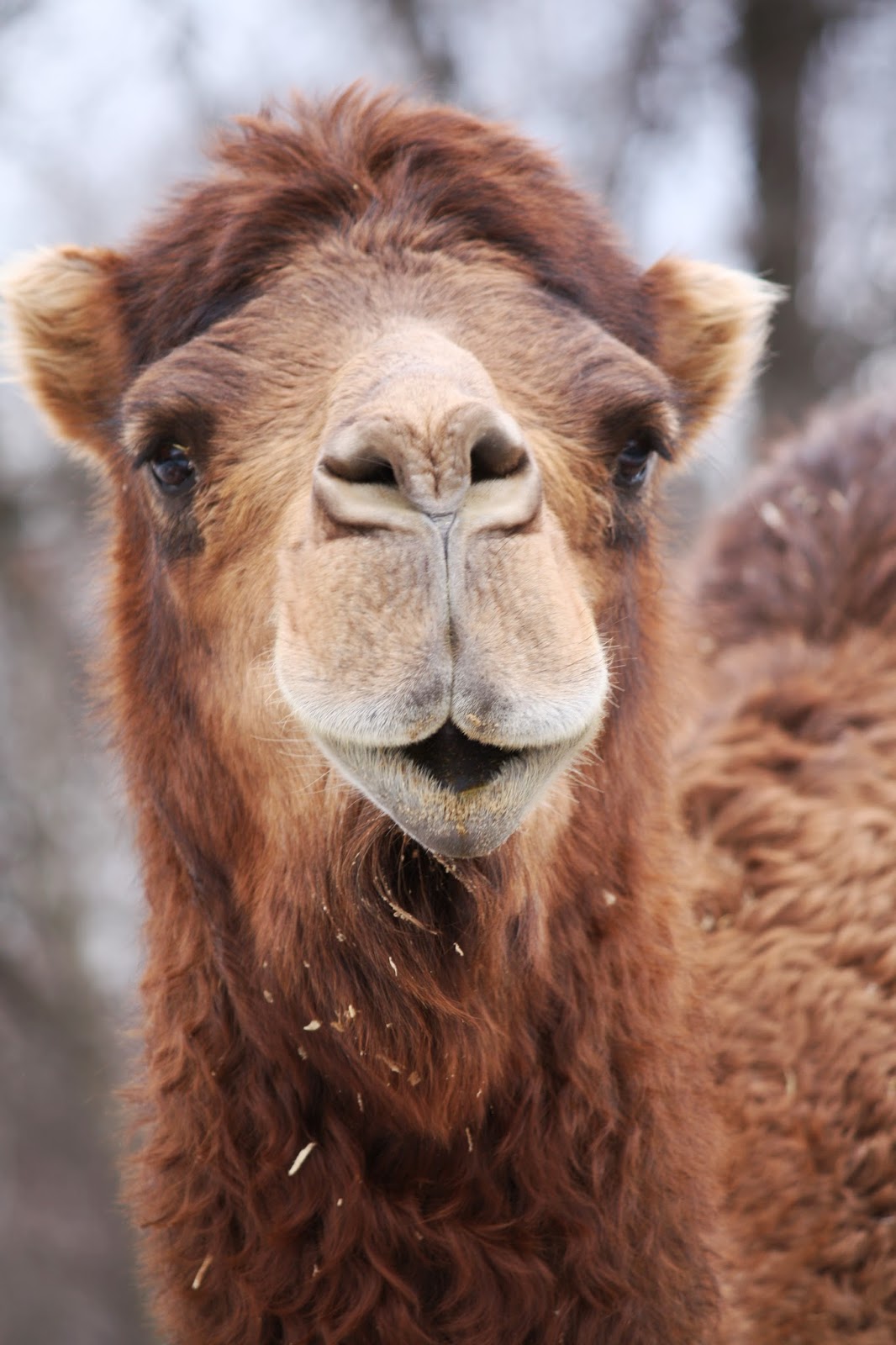
Yup, it's a camel--distant cousin of the llama and alpaca


Why does Mama Llama favor the llama over its camelid cousins? Well, it's pretty obvious when it comes to the camel. Scary! Don't mess with a camel! Then we have the wild cousins--guanaco (gwan'-ah-co) and vicuna (vah-coon'-yah), which, like the domesticated alpaca, are "sheepish," meaning that you can't easily hug or pet them or pal around with them.

But llamas? They're highly social animals. They like to be stroked on their long necks, and they're the only camelids you would enjoy taking a walk with. That's one of the many reasons that we established our private zoo for llamas--so you can spend some time getting to know this very friendly animal. We stock males only, because within the camelid family, male llamas are the friendliness. There's a method to our madness here at ShangriLlama!

And isn't it interesting how many colors the llama comes in? At ShangriLlama, we purposely chose different colors for our pack, among the many options which include black, white, brown, tan and gray in solid, patchwork, and spotted (appaloosa) patterns! The llama's cousins are pretty much just shades of brown--lovely browns--but brown.

It is true that the vicuna, guanaco and alpaca have more luxurious wool than a llama. But what fun is that if you can't easily pet these animals and can't afford to buy its wool at $1,800 to $3,000 per yard?!

The only thing a camel has that might be fun to have on a llama is its hump. People ask Mama Llama ALL THE TIME if they can ride llamas. Nope; no self-respecting llama will let you, because that would hurt their backs! However, lllamas will gladly carry your lunch or your camping equipment in a proper pack on their sides. Walking next to them is plenty fulfilling, just to have the pleasure of the gentle llama's company.

If you've never walked with a pack of llamas, then you're missing out on an unforgettable experience with the most gentle of the four camelid cousins. Do add this to your life's "bucket list!"

Happy Trails from Mama Llama!


Posted by Picasa